What to Get in Writing Before You Book an Event Printer
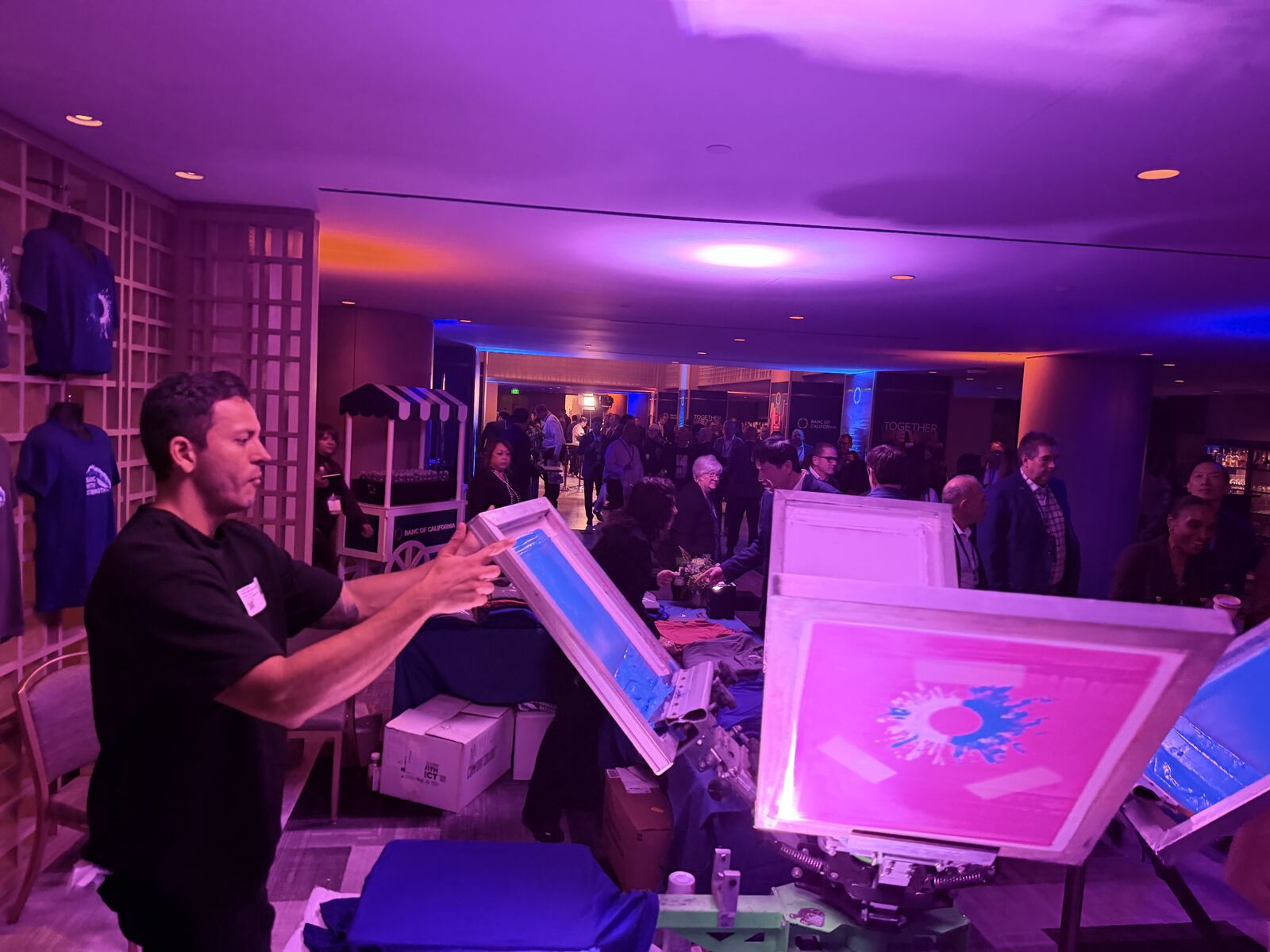
The clauses that decide whether your live printing station runs smoothly or turns into a loading-dock argument.
Live printing goes wrong in the same three places almost every time: power, artwork, and the moment somebody asks the crew to stay an extra hour. All three are cheap to settle on paper and expensive to settle at 6pm on a loading dock with a line forming. The event printing contract terms to get in writing are not exotic — they are the boring operational details a solid vendor is happy to commit to and a shaky one keeps deliberately vague.
Here is the checklist, roughly in the order a planner runs into each item. If a proposal you are holding is missing four or more of these, send it back before you send a deposit.
Say exactly what you are buying
“Live printing station, 4 hours” is not a scope of work. It is a hope. The contract should name the number of stations, the number of presses or heads inside each station, the decoration method for each, and the crew headcount that comes with them.
Then separate run hours from on-site hours. Load-in, setup, tear-down and load-out are usually two to three hours combined, and you do not want that eating the window your guests are actually in the room. Write the guest-facing hours as their own line.
Finally, get throughput expressed as a rate rather than a promise. A DTF and heat press station realistically finishes 60–90 pieces an hour. Embroidery runs 6–12 minutes per piece. A hat and patch press does 30–45 hats an hour. If someone writes “we will keep up with demand,” ask them to convert that into a number and initial it.
The site requirements exhibit
This is the single most useful page in the whole agreement, and most contracts omit it. Ask for a written site requirements sheet you can forward to venue operations word for word.
- Electrical: each heat press wants a dedicated 20-amp circuit. Two presses on one household circuit will trip it repeatedly. The document should state how many circuits are needed, who is responsible for supplying them, and what the fallback is — usually a generator at additional cost.
- Footprint: table count and exact dimensions, backdrop height, and clearance behind the tables for the crew.
- Load-in: dock or street, stairs or elevator, and the maximum push distance from vehicle to station. A 300-foot push through a convention hall changes the setup estimate.
- Ventilation and surface protection for anything running heat indoors.
Attach the certificate of insurance requirements too. Most venues want to be named as an additional insured and want the COI 14 to 30 days out. Put that deadline in the contract so it is somebody’s named job.
Artwork lock dates and who owns the file
Most bookings happen 4–8 weeks out and artwork should be locked around 10 business days before the event. Write the lock date as a calendar date, not a relative one, because relative dates get argued about.
The contract should also state the file spec you owe them (vector or 300 dpi at actual print size), how many rounds of revision are included, and the change fee after lock. If custom patches or chenille are involved, back the date up further — those carry roughly a three-week production lead on their own.
Read the intellectual property clause carefully. Almost every printing agreement includes a warranty that you hold the rights to the artwork you supply. That clause is normal and it is also where trademark risk lands on you, so clear any borrowed logo, team mark or licensed character before you sign rather than after. Our planning timeline walks the full calendar if you want to work backwards from your date.
Garment counts, sizes and leftovers
Decide in writing who buys the blanks. If the printer supplies them, get the size curve written out unit by unit, not as a total. A 200-piece order that arrives as 100 mediums is a 100-piece order.
Plan roughly 1.05 to 1.15 pieces per expected guest, and note in the contract that the buffer exists so nobody bills you for “overage” on garments you already paid for. Then settle three things people forget:
- Who owns unused blanks after the event, and who pays to ship them back to you.
- Whether unopened cases are refundable, and at what restocking percentage.
- What happens if you run out mid-event — a rush restock clause is rarely realistic, so more often the honest answer is a written cutoff and a post-event fulfillment option.
Overtime, weather and the cancellation ladder
Overtime is the term most likely to surprise you, because it gets negotiated live in front of your client. Fix the hourly extension rate in the contract and note whether it is billed in half-hour or full-hour blocks.
Also define a late start that is not the crew’s fault. If the venue opens the dock 90 minutes behind schedule, does your window shift or does it shrink? Both answers are defensible; you just need to know which one you agreed to.
For outdoor events, spell out weather. Name the conditions that stop work — sustained wind on a canopy, standing water near electrical, temperatures that keep adhesive from setting — and say who has authority to call it. Then attach a reschedule credit rather than relying on a generic force majeure paragraph. Finally, get the deposit schedule and a tiered cancellation ladder by days out, plus the travel fee as a flat stated number. A staffed local package generally starts around $5,000; anything outside the home service area should show its travel line separately on the pricing sheet rather than hiding inside the day rate.
Frequently asked questions
How far ahead should I sign an event printing contract?
Four to eight weeks out covers most dates and gives you room to lock artwork about ten business days before the event. If your design includes custom patches or chenille, back that up by another three weeks for production. Peak season dates and holiday weeks go faster, so a signed agreement is what actually holds the crew.
Should the contract cap the number of pieces?
Yes, one way or another. Either set a hard piece count or write the hourly throughput rate the station is expected to hit. An uncapped promise sounds generous but it is the clause that produces arguments when a line forms, and a written rate lets you staff a second station instead of discovering the problem at hour three.
Who is responsible if the venue cannot supply enough power?
You are, unless the contract says otherwise, which is why the site requirements exhibit matters. Get the circuit count in writing, forward it to venue operations early, and confirm receipt. If the building genuinely cannot deliver, a generator is the standard fallback and should already have a price attached.
Send us the details
If you want a proposal that already contains every item above, tell us the date, the venue, the guest count and the decoration you have in mind. You can also read how to choose an event printing company first if you are still comparing vendors. Call (562) 614-4800 or request a quote and we will send the site requirements sheet with it.